


What Are Digital Printing Services?
You need flyers for a weekend event, updated business cards for a new team member, and a short run of product labels that might change next month. That is where the question what is digital printing services starts to matter. Digital printing is built for speed, flexibility, and quality without the long setup process that comes with more traditional print methods.
For many businesses, artists, and organizations, digital printing is the practical answer when timelines are tight and quantities are moderate. It helps you go from file to finished product quickly, which is a big reason it has become the go-to option for everyday marketing materials, branded collateral, and custom short-run projects.
What is digital printing services and how does it work?
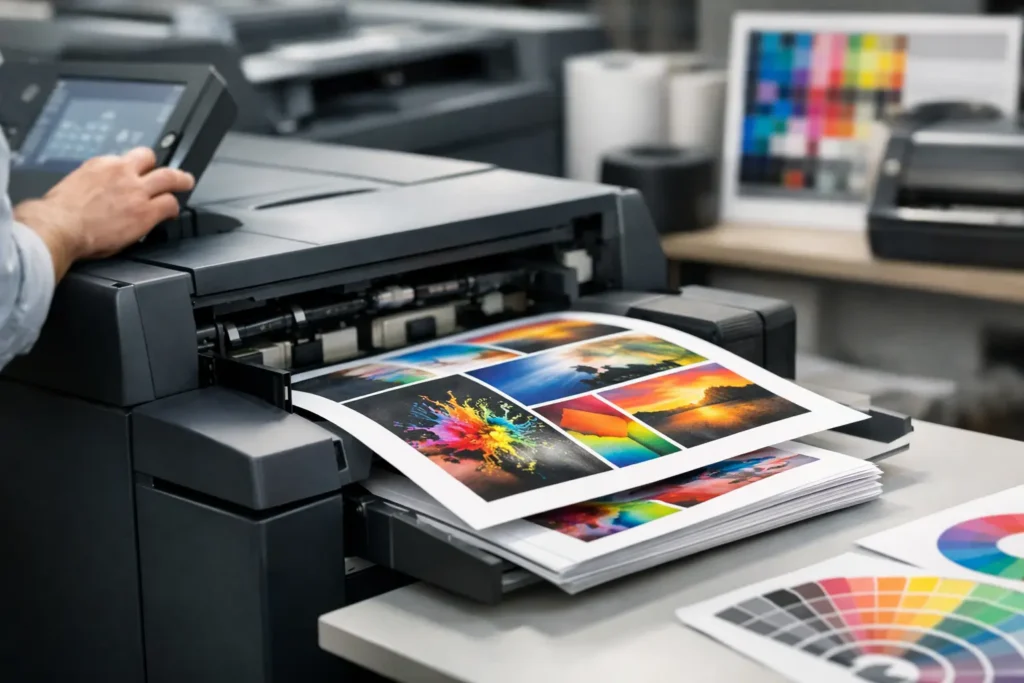
Digital printing services refer to printing directly from a digital file onto paper, cardstock, vinyl, fabric, or other materials using professional production equipment. Instead of creating printing plates, the artwork is sent from a computer to the printer, which applies toner or ink directly to the surface.
That might sound simple, but the impact is significant. Without plate-making and lengthy press setup, jobs can move faster, revisions are easier, and smaller quantities make more financial sense. If you need 50 postcards instead of 5,000, digital printing is often the smarter fit.
This process is commonly used for business cards, brochures, booklets, postcards, posters, presentation folders, stickers, signage, fine art reproductions, and custom promotional pieces. It is especially useful when each order needs to be turned around quickly or adjusted from one run to the next.
Why businesses choose digital printing services
Most customers are not looking for printing theory. They want to know whether a method fits their deadline, budget, and brand standards. Digital printing earns its place because it solves common business problems without adding extra production friction.
Speed is one of the biggest advantages. Since there are fewer setup steps, jobs can often be produced much faster than offset printing. That matters when you are preparing for a trade show, replacing outdated menus, launching a product, or trying to get signage ready before an event.
Flexibility is another reason digital stands out. Need to update pricing, swap a team photo, or test two versions of a postcard? Digital makes those changes much easier. You are not locked into a large run based on one static design.
It is also a solid fit for budget control. Large offset runs can lower the cost per piece at high volume, but that is not always helpful if you only need a few hundred pieces now. Ordering more than you can use often creates waste. Digital printing lets you buy closer to what you actually need.
Where digital printing works best
Digital printing shines in everyday commercial printing and brand support. If your materials change often, your quantities are moderate, or your timing is tight, it is usually a strong option.
A local business might use digital printing for business cards, flyers, rack cards, door hangers, and sales sheets. An event marketer may need posters, banners, table signs, postcards, and handouts on short notice. A creative professional may want art prints, stickers, and branded packaging inserts in small batches. A nonprofit may need updated donation forms, event programs, and sponsor signage without committing to a huge run.
This is also where a full-service print partner becomes valuable. When design support, file prep, print production, and promotional items can all be handled in one place, the process gets easier. That is especially helpful for growing businesses that do not have time to coordinate with multiple vendors.
Digital printing vs. offset printing
This is where context matters. Digital printing is not automatically better than offset printing. It is better for certain jobs.
Offset printing uses plates and is often ideal for very large runs, exact color matching across long production cycles, and specialty projects where the setup cost pays off over volume. If you are printing thousands of catalogs or large quantities of identical marketing pieces, offset may offer better value over the full run.
Digital printing is typically the better choice for short to mid-size runs, quick reorders, personalized printing, and projects that need a fast turnaround. If your design changes frequently or you are still testing messaging, digital is usually the more efficient path.
The right question is not which method is best in general. It is which method is best for your specific project.
What products can be made with digital printing services?
The range is broader than many people expect. Digital printing is not limited to office-style documents or simple handouts. Professional print providers use it across a wide mix of marketing, retail, event, and branded products.
Common applications include business cards, brochures, postcards, booklets, catalogs, presentation folders, posters, menus, labels, stickers, banners, signage, art prints, and packaging components. In some production environments, digital technology also supports custom apparel decoration and branded merchandise depending on the material and print process being used.
That variety makes digital printing useful for both day-to-day operations and campaign-driven marketing. A business can print monthly promo cards, seasonal window graphics, employee onboarding folders, and trade show handouts using the same core production approach.
What to expect from print quality
One of the biggest misconceptions is that digital printing means lower quality. That may have been true decades ago in some settings, but modern commercial digital equipment can produce sharp detail, strong color, and highly professional results.
That said, quality depends on the file, the material, and the intended use. A glossy postcard, a matte fine art print, and a weather-resistant outdoor sign all require different production choices. Resolution, color mode, bleed setup, finishing, and substrate selection all affect the final piece.
This is why hands-on guidance matters. A file that looks fine on a laptop screen may not print the way you expect if the sizing, color, or image quality is off. Working with a local team that can review your artwork and recommend the right stock or finish helps prevent expensive surprises.
The real advantage: customization without the slowdown
If there is one reason digital printing services continue to grow, it is this: customization is easier. You can print smaller quantities, produce multiple versions, and make updates without resetting an entire production process.
That is useful for targeted marketing. You can create region-specific postcards, personalized mailers, event-specific signage, or branded packets for different sales audiences. You can also test what works before committing to a larger campaign.
For smaller businesses and startups, that flexibility is a major advantage. It supports growth without forcing large upfront print commitments. You get professional materials that match where your business is right now, not where you hope it will be six months from now.
How to know if digital printing is right for your project
A few practical questions can help you decide. How many pieces do you need? How quickly do you need them? Is the design likely to change? Do you need multiple versions? Are you trying to stay lean on inventory and cost?
If the answer to several of those points is yes, digital printing is probably worth considering. It is particularly useful when you need high-quality materials without the delay and volume requirements of traditional long-run printing.
This is also why many San Diego businesses prefer working with a local production partner instead of an online-only platform. When timing is tight or the project has moving parts, direct communication matters. A responsive print team can catch file issues early, recommend practical options, and help you choose a format that supports your goals instead of just processing an order.
At Ego id Media, that local, hands-on approach is part of the value. Customers are not just buying printed pieces. They are getting support from a team that understands how design, production, promotion, and timing all connect.
What digital printing services really offer
At its core, digital printing gives you a faster, more adaptable way to produce professional print materials. It supports short runs, changing information, tighter deadlines, and a wide range of custom products. For many businesses, that combination is more useful than chasing the lowest possible unit price on a massive order they may not even need.
Good printing should make your next move easier, whether that means promoting an event, refreshing your brand materials, launching a product, or simply keeping up with growth. If your project needs flexibility as much as quality, digital printing is often the right place to start.
Leave a reply

Leave a reply