


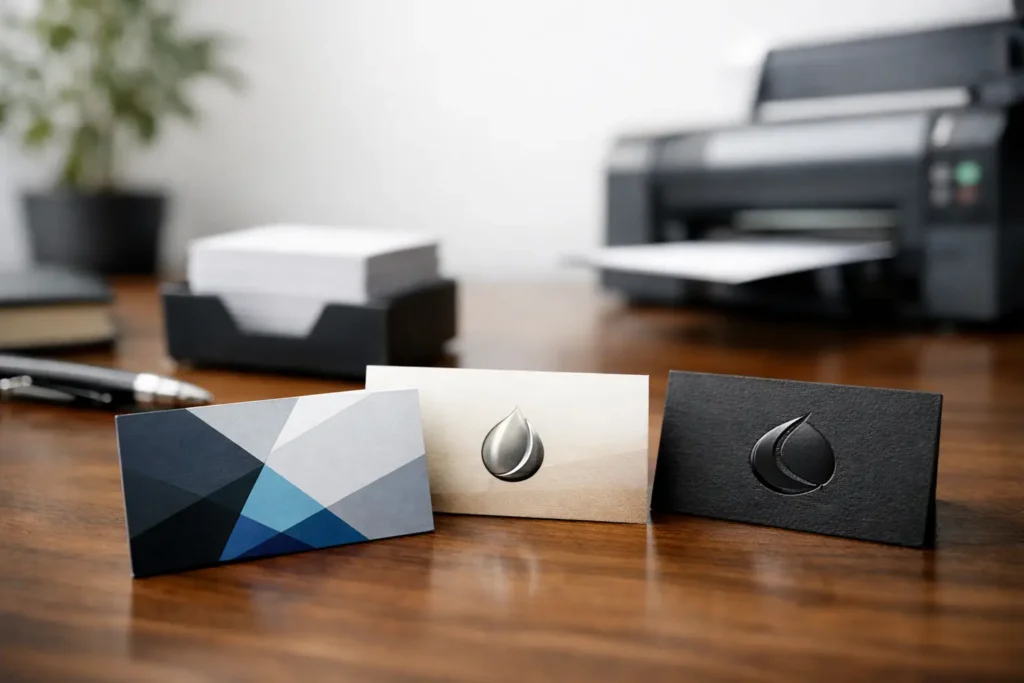
Custom Business Cards Printing That Works
A business card still does one job better than almost anything else in marketing – it makes your brand tangible in a matter of seconds. When someone meets you at a trade show, open house, networking event, client meeting, or local pop-up, they are not looking for a long pitch. They want something clear, polished, and easy to keep. That is where custom business cards printing earns its place.
For small businesses, startups, artists, and community organizations, the right card is not just contact information on paper. It is a quick read on your professionalism, your style, and how seriously you take your brand. A flimsy card with weak color and generic design can send the wrong message fast. A well-made card, on the other hand, gives people confidence before the follow-up email ever lands.
Why custom business cards printing still matters
Digital tools are useful, but they do not replace the value of a physical handoff. People forget names. They lose track of phone numbers. They skim messages. A card gives them a real-world reminder that is easy to carry, easy to share, and easy to revisit later.
That matters even more in local markets where relationships drive business. If you are a contractor, realtor, consultant, designer, caterer, event planner, or nonprofit leader, your next opportunity may come from a quick introduction that turns into a call a week later. Your card helps bridge that gap.
There is also a brand control advantage. Social profiles and digital contact cards often live inside platforms you do not fully control. Printed cards let you decide exactly how your business looks and feels, from paper stock to finish to layout. That level of control is small on the surface, but it has a real effect on how people remember you.
What makes a business card effective
The best cards are usually the clearest ones. They do not try to cram in every service, every social handle, and every message. They make it easy for the person holding the card to know who you are, what you do, and how to reach you.
That means design choices matter. Your logo should be readable. Your name and title should feel intentional, not squeezed in as an afterthought. Contact details should be easy to scan. White space is not wasted space – it gives the card room to breathe.
Paper matters too. A heavier stock tends to feel more substantial and more trustworthy. That does not mean every business needs the thickest card available. If you are watching budget, there is usually a smart middle ground that still feels professional. The right choice depends on how often you hand cards out, what audience you serve, and what impression you want to leave.
Finish is another decision that changes the feel of the piece. Matte can feel modern and understated. Gloss can make colors pop. Soft-touch can feel premium. Uncoated stocks can work well if you want people to write notes on the back. There is no single best option. It depends on the brand and how the card will actually be used.
Custom business cards printing options that change the result
This is where ordering online from a generic template can fall short. Two cards can contain the same information and still perform very differently based on print decisions that are easy to overlook.
Size is one example. Standard size works for a reason – it fits wallets, holders, and display stands. But square cards, slim cards, folded cards, or rounded corners can make sense when a brand needs something more distinctive. The trade-off is practicality. A card that stands out visually may also be harder for people to store.
Color accuracy is another factor. If your brand uses specific tones, especially in a logo-heavy design, print quality matters. Cheap runs can shift colors, flatten detail, or make dark areas look muddy. For businesses that care about consistency across signs, flyers, brochures, packaging, and cards, that mismatch becomes noticeable.
Then there is finish detail. Foil, spot gloss, embossing, painted edges, and textured stocks can create a high-end look, but they are not right for every brand. A luxury real estate team may benefit from premium touches. A local service company that needs to order in larger quantities may be better served by a clean, durable standard card with excellent print quality and a fast turnaround.
Design support saves more time than people expect
A lot of business card problems start before printing ever happens. Low-resolution logos, poor spacing, fonts that are too small, and layouts built in the wrong file format can all create delays or disappointing results.
That is why hands-on support matters. If you are building a new brand, refreshing an old one, or trying to match existing marketing materials, working with a local print partner can keep the process moving. A good team can help clean up artwork, adjust the layout, recommend finishes, and make sure the final card reflects the brand you are trying to build.
This is especially helpful for growing businesses that do not have an in-house designer. Instead of guessing your way through paper options or hoping a template behaves the way you want, you can get practical input from people who know how the piece will print in real life.
For San Diego businesses juggling deadlines, events, and day-to-day operations, that support can be the difference between a smooth reorder and a last-minute scramble.
When cheap business cards cost more
Everyone has a budget. That is real, and any good printing partner should respect it. But there is a difference between cost-conscious and careless.
Cards that scuff too easily, print with weak contrast, or arrive with inconsistent trimming can hurt your presentation. If you are meeting prospects face-to-face, that first impression carries weight. Reprinting bad cards also costs time, which is usually more expensive than choosing the right product from the start.
A better approach is to match the card to the goal. If you need a large quantity for frequent handouts, choose an affordable stock that still feels professional. If the card is meant for higher-value meetings or curated client interactions, it may be worth stepping up to a thicker stock or specialty finish. Smart printing is not about spending the most. It is about spending where it counts.
Local printing has real advantages
Speed is one reason businesses stay local. If you need cards for an upcoming event, a new employee, or a sales meeting, turnaround matters. So does accountability. When you can talk to a real team, ask questions, review options, and solve issues quickly, the process gets easier.
There is also value in working with people who understand your market. A local print partner sees the kinds of businesses, events, and brand styles that are active in the area. That context helps when you are choosing between safe, standard options and something more custom.
At Ego id Media, that local support is part of the value. You are not just ordering a product from a distant portal. You are working with a team that can help connect design, print quality, budget, and deadline into one clear process.
Business cards as part of a bigger brand system
Your card works best when it does not stand alone. It should feel connected to the rest of your printed materials, from flyers and brochures to presentation folders, signage, postcards, and event handouts.
That consistency builds trust. When your card matches your other marketing pieces, your brand feels more established. People may not always be able to explain why one business feels more put together than another, but they notice it.
This is also where planning ahead helps. If you know you will be printing multiple products over time, it makes sense to create a card design that fits the broader look of your brand. That way each new piece supports the next instead of starting over from scratch.
What to have ready before you print
Before placing an order, it helps to know your essentials: logo files, brand colors, contact details, preferred finish, quantity, and deadline. If you are unsure about any of those, that is fine. The point is not to have every detail perfectly figured out. The point is to start with a clear goal.
Ask yourself a simple question: where will this card be used most? Daily networking, retail counters, trade events, client presentations, and creative portfolios all call for slightly different choices. The more practical the use case, the easier it is to choose the right format.
A good card should feel like an extension of your business, not a generic item you checked off a list. That is why custom business cards printing remains one of the smartest small investments a brand can make. When the design is sharp, the stock feels right, and the production quality holds up, your card keeps working long after the handshake. If you are going to put your name in someone else’s hand, make it worth holding onto.
Leave a reply

Leave a reply